An educational guide to bridging finance for property developers, covering common use cases, typical features, exit strategies, the project lifecycle from bridging to exit finance, and practical considerations when timing and momentum matter.
The Development Finance Guide to Short-Term Bridging Finance for Developers
Bridging finance can be a practical way for property developers to fund a project when timing is tight. It's designed for short-term needs, helping bridge the gap between acquiring land or a property and securing longer-term development finance, refinancing, or completing a sale.
For developers, bridging is often considered when there's a clear plan to move quickly, such as auction purchases, time-sensitive acquisitions, or refurbishment and conversion work that needs momentum before longer-term funding is in place.
Related reading:
- Looking for a general introduction? This guide covers bridging finance from a developer's perspective. For a full overview of what bridging finance is and how it works, including costs, LTV, and exit risk, see What bridging finance is and how it works.
- Bridging loan costs, rates and fees
- Securing fast bridging loans
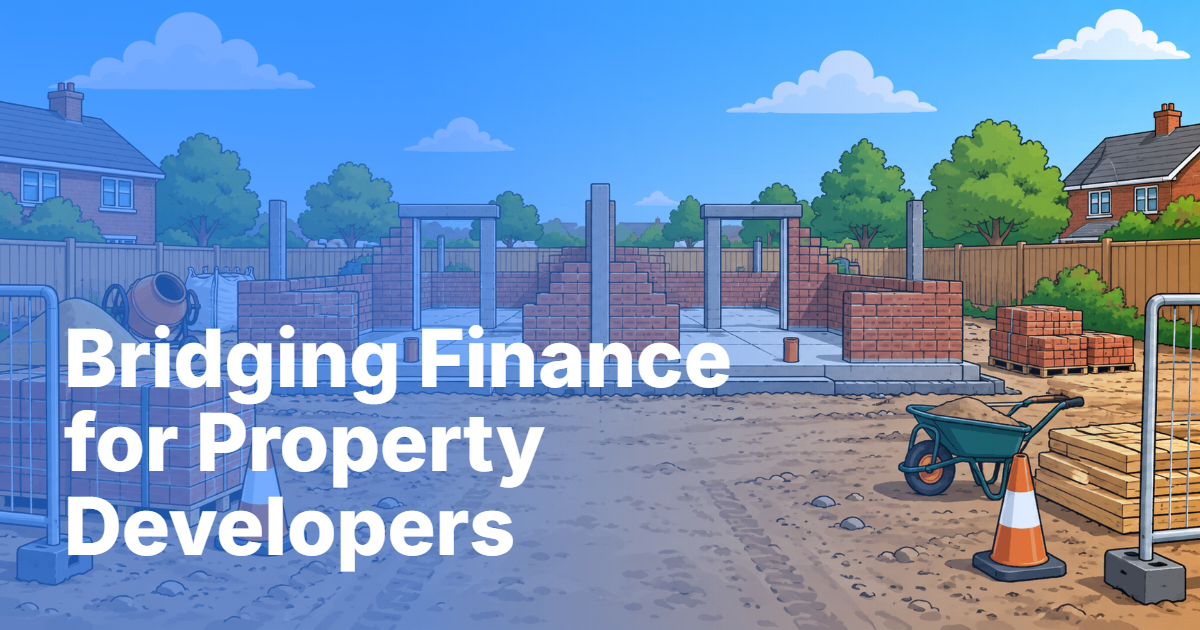
What is bridging finance for property developers?
Bridging finance is a short-term loan secured against the property or land being funded. The purpose is to "bridge" the period until an agreed end point, rather than to provide long-term capital.
Because bridging is typically asset-focused, it can be a suitable option when speed is essential and the project's value is expected to change over time.
When developers commonly use bridging loans
Bridging finance is frequently used where there is a defined short-term objective and a realistic route to repayment. Common scenarios include:
- Auction purchases: completing quickly to secure the asset.
- Pre-development acquisitions: buying land or a property before longer-term funding is finalised.
- Refurbishment and conversion: funding works that improve the property's value ahead of refinance or sale.
- Part-built or stalled projects: bridging the gap while a project is brought back on track.
- Temporary cash flow needs: covering short-term gaps between drawdowns, contractors, or approvals.
The most important consideration is that the bridging period should align with your project timetable and exit strategy.
Typical features developers look for
Bridging products vary by lender and deal structure, but developers often focus on areas such as:
- Loan-to-value (LTV): bridging may be available at higher LTV levels depending on the asset, proposal, and lender approach.
- Timescales: bridging is structured for short durations, with completion and drawdown designed to be faster than traditional routes.
- Interest structure: many deals are interest-only, and some structures may allow interest to be rolled up during the term (subject to the specific product).
- Security type: lending can be secured against residential, commercial, mixed-use, or land assets depending on the case.
- Repayment flexibility: repayment is usually linked to the agreed exit (sale or refinance) rather than monthly capital repayment.
In practice, the "best" structure depends on how your development is expected to progress and when value is likely to be realised.
Benefits of bridging finance for development projects
Bridging finance is often chosen to support momentum. Potential advantages include:
-
Speed and certainty of funding Short-term lending can help reduce delays caused by longer approval cycles.
-
Short-term flexibility Terms are typically aligned to the period until the next stage of the project, such as refinance or completion.
-
Multiple exit routes Developers may repay through sale, refinance into longer-term finance, or other project-specific outcomes.
-
Project-led underwriting Lenders may place significant weight on the asset, the proposed works, and the expected end value.
-
Support for specialist situations Some bridging structures may be considered for land-only purchases, part-built assets, or refurbishment where there is a credible plan.
Exit strategies: how developers repay bridging loans
A bridging loan is only as strong as the exit plan. Common repayment routes include:
- Sale of the asset after works complete or value improves.
- Refinancing into longer-term development finance, buy-to-let, or a commercial mortgage.
- Staged outcomes where the project is structured to deliver a clear repayment point within the bridging term.
When planning an exit, it helps to consider practical factors such as marketing timelines, build programme risk, and the time required to secure the next funding step.
Bridging and exit finance across the project lifecycle
In practice, bridging finance is often used as a "bridge" between one funding event and the next, such as moving from purchase to build, or from build to sale. This "fund now, refinance later" approach helps developers manage the realities of development timelines, where costs often occur before sales receipts arrive.
For many developers, a project's funding can be thought of in stages:
- Early stage: bridging finance provides the capital to acquire a site, start works, or maintain momentum while longer-term funding is arranged. Speed and cashflow flexibility are usually the priority here.
- End stage: as the development nears completion, development exit finance can be used to refinance or replace the bridging (or development) facility once the path to repayment, through sales or refinancing, is clearer.
Planning both stages in advance can reduce the risk of having to refinance under pressure. Some practical points developers often weigh include:
- How long the bridge needs to last before the exit route is ready
- Whether exit finance can align with completion and sales milestones
- How costs and cashflow will be managed during the build period
- What happens if sales take longer than expected
Bridging finance vs development finance
Developers sometimes use both, but they serve different purposes:
- Bridging finance is typically short-term and focused on bridging to an agreed end point (often a sale or refinance).
- Development finance is usually structured to fund build costs over a longer development period, often with more detailed monitoring of the project.
In many cases, bridging can be used at the start of a project to secure the asset or fund early works, while development finance is arranged for the main construction phase.
For a side-by-side comparison, see our dedicated guide: Bridging vs development finance: choosing what fits.
Key questions developers should consider
Before approaching a bridging proposal, it's useful to pressure-test the plan:
- What is the repayment date and what triggers it?
- Is the exit route realistic within the bridging term?
- How will the property's value change after the works?
- What evidence supports the project plan? (for example, costings, timelines, contractor information, and expected end value)
- What happens if the project runs late? Consider whether extensions or alternative exits are workable.
- Are the terms aligned to your cash flow? This includes interest structure and any costs that may apply.
A well-prepared application can make it easier to demonstrate that the bridging period is controlled and repayment is achievable.
Considerations around process and market conditions
Bridging lending decisions can depend on factors such as:
- the property's current condition and marketability
- the credibility of the refurbishment or development plan
- valuation approach and expected end value
- the strength of the exit strategy
- the overall risk profile of the deal structure
Digital processes and automated valuation tools can help speed up parts of underwriting, but the overall timeline still depends on due diligence, documentation, and the complexity of the case.
Summary
Bridging finance for developers can provide time-sensitive funding, particularly when acquiring an asset quickly, funding early works, or bridging to longer-term finance or a sale. The most important elements are a clear project plan, a realistic exit strategy, and terms that fit the development timetable.
Related guides
Get in touch
We are your online mortgage broker, offering you the convenience of applying for a mortgage online. However, we understand that sometimes you may prefer to speak with a human - phone, email or in person.
- Phone number
- 01133 205 902
- [email protected]
- Postal address
-
31 Bradford Chamber Business Park,
New Lane, Bradford, BD4 8BX
Looking for a career in Mortgage Advice? View job openings.
We are authorised and regulated by the Financial Conduct Authority (No. 919921). The Financial Conduct Authority does not regulate most Buy to Let mortgages.
Think carefully before securing other debts against your home. Your home may be repossessed if you do not keep up repayments on your mortgage.
Our initial consultation is free. If you choose to proceed, we’ll explain any broker fees upfront before you commit.
Cyborg Finance Limited is registered in England and Wales (No. 12131863) at Bradford Chamber, New Lane, Bradford, BD4 8BX.